
 Bulgaria
  Greece
  Turkey
  Romania
  Serbia
  N. Macedonia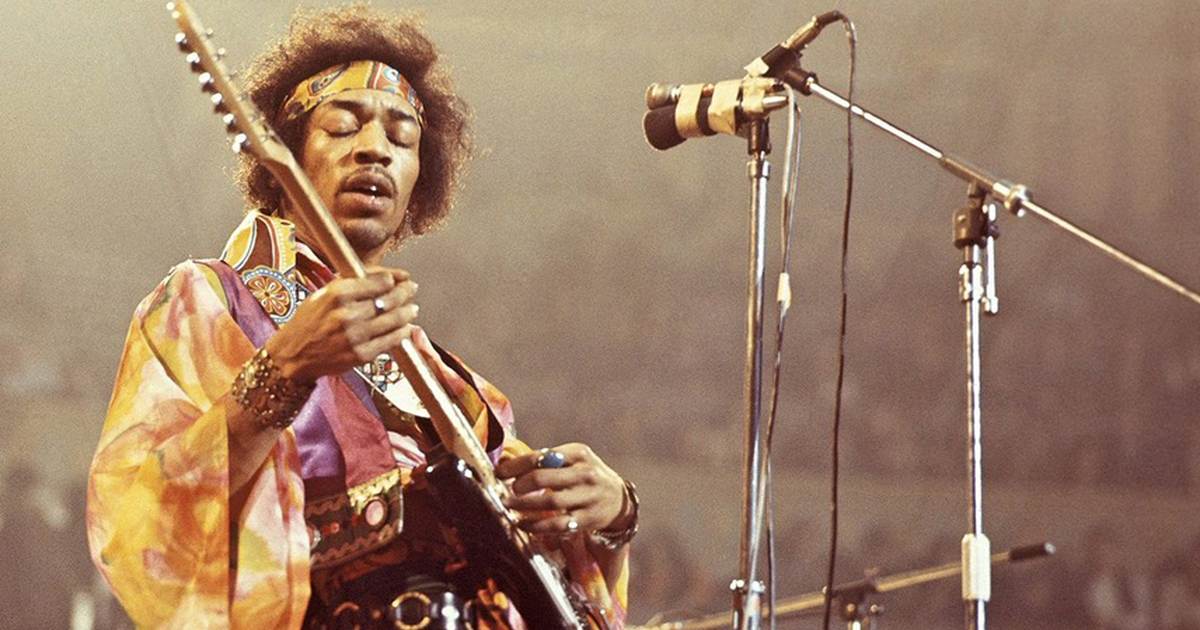
If one musician must be named who forever changed the perception of what the electric guitar could be, it is Jimi Hendrix.
Before him, the guitar was already an important instrument in rock music, thanks to people like Chuck Berry, Buddy Holly, Eric Clapton, and other pioneers. But Hendrix did something different – he didn't just play the guitar; he turned the instrument into an extension of the human voice and imagination. He showed that the electric guitar could simultaneously be a rhythm instrument, a solo instrument, a source of soundscapes, a means of emotional conversation, and almost a separate 'character' in the music.
His career on a world level is exceptionally short – only a few years in the late 1960s – but his influence is enormous. After him, almost every great rock guitarist had to answer the question: 'What new can I say on this instrument?'
Hendrix's style is a unique blend of blues, rock and roll, soul, psychedelic rock, funk, and improvisational jazz approach. He took the foundation from the blues but expanded it into a completely new musical space. Many guitarists before him strived for purity and precision – Hendrix sought expressiveness. For him, a slightly 'imperfect' note played with feeling could be more valuable than ten absolutely precise but soulless notes. This is precisely what makes his style so human.
One of his greatest strengths is his sound. Even in the first few seconds, it can often be recognized. His tone is warm, full, aggressive but not cold, saturated with harmonics, slightly 'torn' by distortion, alive, and constantly changing. Hendrix didn't just use effects – he turned them into part of his musical language.
Among the main elements of his sound are Fender Stratocaster guitars, Marshall amplifiers, delay effects, wah-wah pedal, and controlled feedback. Particularly important is that he didn't rely solely on technique and equipment – the same amplifier in another guitarist's hands doesn't sound like Hendrix. His true 'effect' is his own hands.
String bending is one of his greatest strengths. Hendrix doesn't use it just to reach a higher pitch but to express emotion – his bends sound like a human voice: they start tense, reach a precise height, and often end with characteristic vibrato. He showed that one note can tell a story.
Hendrix's vibrato is among the most recognizable in guitar history. He doesn't just shake the tone – he makes it 'breathe.' His wide vibrato gives his solos emotional power and is one reason his guitar often sounds almost like a singer.
A frequently underestimated aspect is his rhythm guitar. Many people know Hendrix only as a solo guitarist, but he is one of the greatest rhythm guitarists in history – using chords, individual melodic lines, ornaments between chords, connecting transitions, and percussive strikes. In songs like Little Wing and Castles Made of Sand, he shows an approach that would later influence an entire generation of guitarists, playing harmony, rhythm, and melody simultaneously.
In improvisation, Hendrix is a true revolutionary. He doesn't just perform solos – he creates music in the moment, and his live performances often differ dramatically from the studio recordings. An example is Machine Gun – one of his most impressive performances, where the guitar recreates a sense of chaos, tension, and drama through noise, feedback, dynamics, timbre changes, and free improvisation.
Hendrix's solos are not speed contests – he thinks like a vocalist, using pauses, repetition of musical ideas, tension and release, dynamic changes. He understood something very important: sometimes the most powerful note is the one you let ring.
Jimi Hendrix is often perceived only as a virtuoso guitarist, but this is an incomplete picture – he is also an exceptional composer. Songs like Little Wing, The Wind Cries Mary, Purple Haze, Bold as Love, Castles Made of Sand, and Voodoo Child (Slight Return) show a man with enormous musical imagination.
For objectivity, limitations must also be noted. Hendrix is not the fastest guitarist by later world standards, and he does not use techniques that became important for virtuosos much later – two-handed tapping, sweep picking, extreme speed. Some of his live performances are chaotic and unpredictable. But this is part of his philosophy – he sought moment-by-moment inspiration, not sterile perfection.
The most important lesson from him is that technique doesn't make a great guitarist – technique is only a means through which the musical idea is expressed. Hendrix showed that one's own sound is more important than copying, that one note can be stronger than many notes, that experimentation can change history, and that the instrument must have its own voice. Before him, the electric guitar was an instrument. After him, it had a voice.