
 Bulgaria
  Greece
  Turkey
  Romania
  Serbia
  N. Macedonia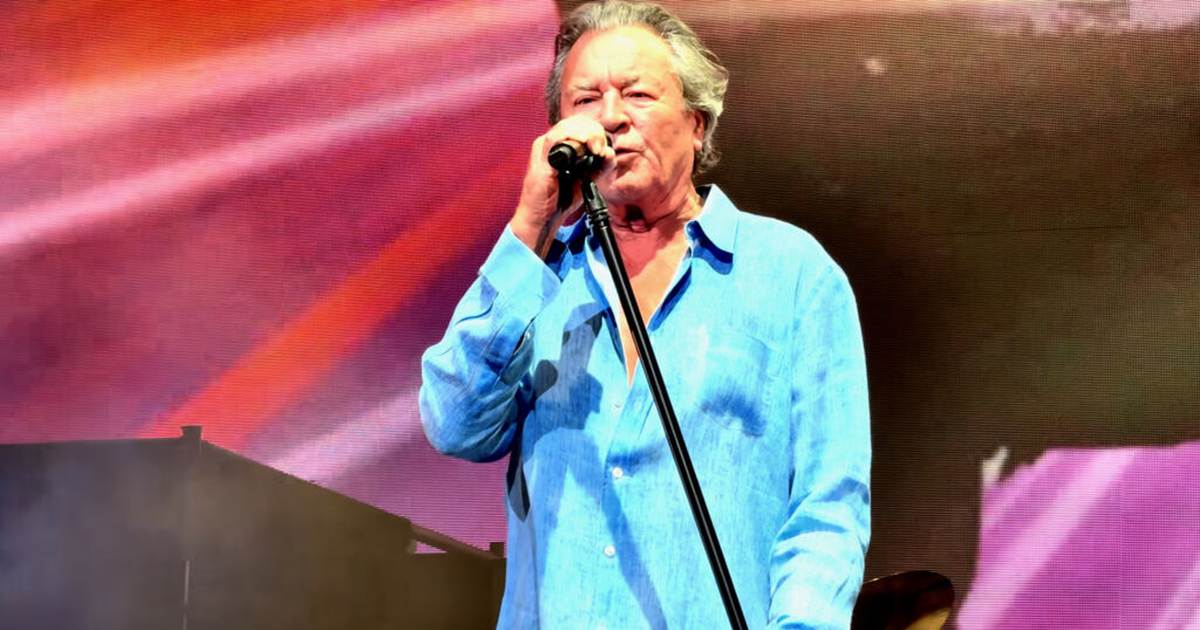
Ian Gillan is one of the greatest rock vocalists of all time and one of the most important figures in the development of hard rock and heavy metal. As the frontman of Deep Purple during the classic period, he introduced a new standard for rock singing – a combination of immense power, impressive range, and inimitable expressiveness. Few singers have had such a strong influence on subsequent generations.
His vocal range is estimated between D2 and C6, with some studio performances reaching even higher notes. His real concert range during his strongest years covers about four octaves. What matters, however, is not just how high he can sing, but with what ease and power he reaches those notes.
His timbre is unique. In the lower register, the voice is warm, full, and slightly raspy. The middle register is rich and saturated, while the high notes are bright, metallic, and extremely penetrating. Even at maximum power, his voice retains a distinct melodiousness without descending into chaotic shouting.
One of his most distinctive features is exceptional freedom in the high register. In the late 1960s and early 1970s, few rock singers could perform such high notes with such power. The legendary peaks in Child in Time and Strange Kind of Woman remain among the most challenging moments in classic rock to this day.
His technique is unusual. Gillan was never an academically trained singer, and much of his style was built intuitively. He uses powerful diaphragmatic support but often sings at the edge of his capabilities. This creates a sense of raw energy but simultaneously strains the voice significantly more than with vocalists like Ronnie James Dio or Rob Halford.
Falsetto is not a primary element in his style. Instead, Gillan prefers to reach high notes with a powerful mixed register and strong chest resonance. This gives his voice its characteristic aggressiveness and drama.
Especially impressive is his ability to shift instantly between different vocal techniques. Within a single song, he can sing a calm blues phrase and then explode into an almost operatic high scream. This unpredictability makes his concerts an unforgettable experience.
His intonation in peak years is excellent, although live performances sometimes sound freer and more improvisational compared to studio recordings. This is not a result of lack of technique but of his desire to constantly change his interpretation.
His vibrato is natural, relatively narrow, and very characteristic. He doesn't use it constantly, but only when he wants to emphasize a particular emotion or climax.
His articulation is good, although in the most aggressive performances, individual words can be lost due to the tremendous energy. This never detracts from the impact – on the contrary, it contributes to the sense of spontaneity.
Dynamics are one of his greatest strengths. Few rock singers can build tension as convincingly. In Child in Time, he starts almost in a whisper and gradually reaches some of the highest and most dramatic moments in the history of rock music.
The most serious weakness in his career is related to the enormous strain he places on his voice. As early as the second half of the 1970s, signs of wear began to appear. With age, the highest register gradually weakens, and the characteristic raspiness becomes more pronounced. Nevertheless, Gillan manages to adapt by relying more on interpretation and stage presence than on extreme heights.
Among the best examples of his vocal qualities are Child in Time, Highway Star, Strange Kind of Woman, Lazy, Fireball, Perfect Strangers, Knocking at Your Back Door, and his legendary performance in Jesus Christ Superstar.
Ian Gillan is a singer who doesn't just perform songs – he lives them. His voice carries raw power, drama, and an inimitable character that are hard to reproduce. If Rob Halford is the symbol of technical virtuosity, Ronnie James Dio of perfect control, Klaus Meine of melodic purity, and David Coverdale of blues sensuality, then Ian Gillan is the embodiment of unbridled rock energy. In his strongest years, he demonstrated abilities that remain the benchmark for any vocalist daring to face the challenges of classic hard rock.