 Bulgaria
  Greece
  Turkey
  Romania
  Serbia
  N. Macedonia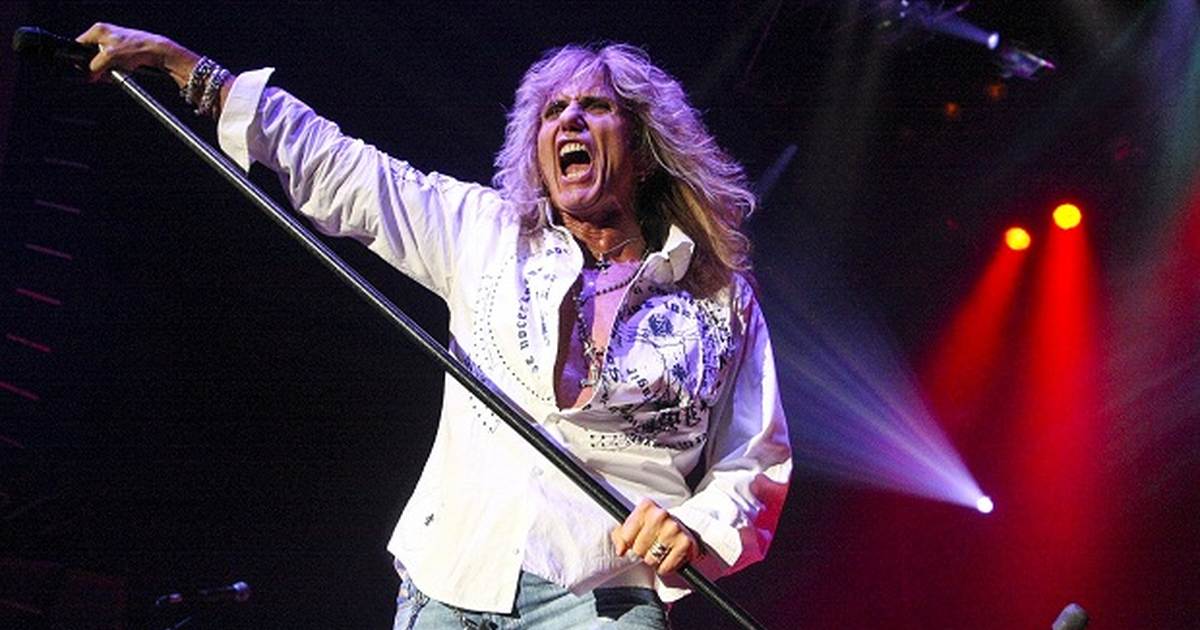
If Rob Halford is the model for the classic heavy metal vocal, David Coverdale is one of the greatest blues-rock and hard rock singers. His strength was never in extreme high notes, but in rich timbre, emotion, and an incredible ability to 'tell a story' through his voice.
David Coverdale is one of the most recognizable rock vocalists of all time. His career began in Deep Purple, where he inherited the legacy of the legend Ian Gillan – a task many considered impossible. Instead of trying to copy him, Coverdale built his own style based on blues, soul, and classic rock. Later, with Whitesnake, he became one of the emblems of 1980s hard rock.
His vocal range is estimated between G2 and G5, with studio recordings reaching slightly higher notes. His practical concert range is around three octaves. This is not a record, but range was never his strongest weapon.
Coverdale's real magic is his timbre. Few rock singers possess such a rich, warm, and full voice. The low notes sound deep and velvety, the middle register is saturated and powerful, and the high notes have characteristic raspiness that carries immense emotion. Even when he sings just one phrase, almost every rock fan recognizes his voice immediately.
His technique is built on the blues tradition. Instead of relying on extreme screams or range demonstrations, he uses controlled raspiness, smooth transitions between registers, and exceptionally good dynamic control. He sings so that every word carries emotion.
Falsetto never occupied an important place in his style. He uses it rarely and mostly as an effect. He prefers to achieve high notes through a powerful mixed voice and natural chest placement. This is why his performance sounds so full and 'masculine.'
One of his greatest strengths is phrasing. Coverdale doesn't just follow the melody – he shapes it. He often slightly anticipates or delays individual words, using pauses and nuances that create a sense of freedom and naturalness. This is a quality characteristic of the best blues performers.
His vibrato is wide, natural, and very beautiful. It never appears artificial or overly dramatic. On the contrary – it becomes one of the most characteristic features of his voice.
His articulation is excellent. Despite the frequent raspiness, the lyrics remain intelligible. His voice has a rare combination of power and softness.
Coverdale masters dynamics superbly. He can start a song almost in a whisper and gradually build it to a true vocal explosion. This is what makes performances like Is This Love, Soldier of Fortune, and Mistreated so impactful.
However, his voice has weaknesses. The intense tours of the 1980s, combined with a heavy lifestyle, led to serious strain on the vocal cords. After the late 1980s, surgeries and periodic vocal problems began. Gradually, the highest notes became harder to reach, and the raspiness became more pronounced. In later years, Coverdale compensated with more mature interpretation, transposing some songs to lower keys without losing their emotional impact.
Among the best examples of his vocal qualities are Mistreated, Soldier of Fortune, Burn, Love Ain't No Stranger, Still of the Night, Is This Love, Sailing Ships, Fool for Your Loving, Here I Go Again, and The Deeper the Love.
David Coverdale is proof that a great rock vocal is not measured only by high notes or number of octaves. His voice possesses a rare warmth, nobility, and emotional depth. If Rob Halford is the symbol of technical perfection, and Axl Rose of unbridled expression, Coverdale is the embodiment of the soul of blues-rock and classic hard rock. It is no accident that he remains one of the most influential and respected vocalists in the entire history of the genre.